
The FALL 2026 course application is now closed, as waitlist capacity is full for all courses.
Short Courses

AI4PH is pleased to offer a suite of free, short courses for graduate students, public health professionals, data science professionals who want to develop their skills and understanding in AI, public health and equity in order to apply them in their research and practice. This program is concerned with transformative change in addressing population and public health challenges and understanding how these tools impact health equity.
These courses are offered without charge as they are funded by CIHR, to learners who are based in Canada (we cannot offer it to international learners at this time). Learners can expect to apply the knowledge from these courses directly in their own practice or research roles in public health. Below are courses that we currently run when we are in session. More courses will be added as they are developed.
Courses are organized according to three streams: Equity, AI Methods, and Public Health. Learners access and manage online course learning materials online using a web-based learning management system called CANVAS with four hours of synchronous learning sessions taking place on ZOOM.
If you are new to programming, we suggest taking a look at these FREE resources to get your started
course Descriptions
Please review the available courses below. Please note: courses will be removed from the application form once applicant pool capacity has been reached. Subscribe to our newsletter here, and follow us on LinkedIn or Bluesky, to be notified of our course offerings (which are posted when the application for the term becomes available).
Introduction to AI for Public Health

Instructor: Dr. Laura Rosella (BIO), Dr. David Buckeridge (BIO), Dr. Lisa Lix (BIO), Dr. Nathaniel Osgood (BIO)
This is an introductory course aimed at those with a background in public health who are new to AI and machine learning. The beginner course will introduce learners to describe the basic definitions of AI and ML in a public health context. Learners will gain a deeper understanding of the public health context and the unique challenges and opportunities for AI implementation in public health. This course is not a prerequisite for other courses, instead meant as a foundation course for those who have not yet had any background or practical exposure.
This course is listed under the “Public Health & Policy” category.
Mandatory live session dates:
Session 1: Oct 29, 12-2pm, ET
Session 2: Nov 12, 12-2pm, ET
Pre-requisites: None
Foundations of AI and Machine Learning
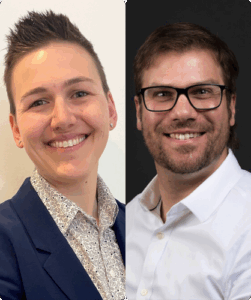
Instructor: Dr. Jaky Keuper and Dr. Daniel Fuller (BIOs)
This short course introduces foundational concepts and implementation of supervised and unsupervised machine learning (ML) approaches, tailored for public health practitioners and students with intermediate R programming skills. The course will be structured to cover supervised learning in the first half and unsupervised learning in the second half.
This course is listed under the “Methods” category.
Mandatory live session dates:
Session 1: Oct 13, 4-6pm ET
Session 2: Nov 17, 4-6 pm ET
Pre-requisites: Intermediate skill level in R required
Applied Longitudinal Data Analysis

Instructor: Dr. Depeng Jiang (BIO)
This course connects longitudinal data analysis to the AI4PH mission of using data science to improve public health. It provides an applied introduction to modeling longitudinal (repeated-measures) data in public health contexts, combining theory with hands-on practice in R. Emphasis is placed on interpretability, reproducibility, and responsible AI in public health practice. Participants will gain practical experience in model fitting, evaluation, and applying advanced methods to real datasets with direct public health relevance.
This course is listed under the “Methods” category.
Mandatory live session dates:
Session 1: Nov 2: 12-3pm ET
Session 2: Nov 16: 12-3pm ET
Pre-requisites: Intermediate skill level in R required, Working knowledge of multiple regression and ANOVA.
The Importance of Knowledge Mobilization for AI and Public Health

Instructor: Dr. Tracie Risling (BIO)
This course will allow learners to explore the concepts of knowledge dissemination, translation and mobilization with a focus on the critical differences in the latter’s knowledge to action directives. The importance of robust knowledge mobilization (KMb) in novel areas of exploration such as the use of artificial intelligence in public health will be examined as a foundation for leaners to build their own KMb plans for current or future research study. Lastly, learners will have an opportunity to trial creative knowledge mobilization approaches supported by information on stakeholder engagement, plain language communication and other science communication best practices.
This course is listed under the “Public Health & Policy” category.
Mandatory live session dates:
Session 1: Nov 6, 12:00-1:30 PM ET
Session 2: Nov 20, 12:00-2:00 PM ET
COURSE STRUCTURE
Each course offers 8-hours total content (split between synchronous and asynchronous learning); all courses will be offered online (virtual). Synchronous session dates/times are included on our application form. Please ensure that you only apply for courses where you are available for the listed synchronous session dates/times (participation is a course requirement). These unique virtual short courses are delivered twice a year, once in the spring and fall.
CERTIFICATE in AI for Public Health
 To receive a certificate, enrollees must complete five (5) courses from the short course in at least 1 in each of the domains of equity, AI methods and public health. Upon completion of the required modules, trainees will be provided with a digital certificate. Please note that more course offerings will be added over time. Learners who do not want or need the certificate are welcome to pick and choose the courses that best suit their needs.
ON DEMAND:
Learners who do not want or need the certificate are welcome to pick and choose the courses that best suit their needs.
FALL 2026 Term Dates
Our application for Fall 2026 is now closed as all waitlists are at capacity.
Application/Course Schedule:
- Course offer notification: September 28, 2025
- Course acceptance deadline: October 5, 2026
- Courses Start: October 13, 2026
- Courses End: November 27, 2026
Offer Protocol: Offers will be awarded first to those learners who have successfully completed AI4PH short courses in the past, with the remainder being offered on a lottery basis.
FAQ
How can I apply? I don’t see an application link.
⇒ The application form link will be located on this page when we are open for applications. If there is no link available, this means that our application period is closed. We encourage you to subscribe to our newsletter here, and follow us on LinkedIn or Bluesky to receive updates on when our next application period will occur. We typically run our application periods in September (for the November term) and December (for the February term).
Do you offer all courses every term?
⇒ We do not offer all of our courses every term. We release the list of available courses when the application for that term is posted. We add new courses every year and some courses will be available multiple years.
How much do the courses cost?
⇒ The courses are free to eligible applicants
What would I have to do in these courses?
⇒ The courses have been intentionally designed to be short, and upskill those working, or looking to work, in the field of AI and public health. Each course is different, as our world-class instructors personalize their courses based on their own research and expertise. Courses are estimated to take about 8 hours to complete (depending on skill level), and typically consist of 2 mandatory two-hour live zoom sessions, along with asynchronous/self-paced work. Courses do include assessment, although courses themselves are pass/fail only.
Can beginners take these courses?
⇒ While many of our courses are introductory, some of our courses are not meant for beginners. Please ensure you check for course requirements posted on the application form. If you are new to programming, we suggest taking a look at these free resources:
https://ai4ph-hrtp.ca/wp-content/uploads/2023/08/AI4PH-Intro-Coding-Resources.pdf
I only want to do one or two courses, and I am not interested in the certificate, can I still apply?
⇒ Yes, you can apply to as many or a little courses as you like.
How many courses per term can I take?
⇒ Due to the popularity of the program and the desire to give as many learners as possible the chance to benefit from this free program, we typically only offer one course each term per learner. Returning learners who successfully completed courses in previous terms and have indicated a desire to complete the 5-course certification will have their applications prioritized, however this does not guarantee that returning learners will be placed in all of the courses they apply for.
I applied to five of the courses to get the certificate, but have only been offered a place on two – how long will it take to get the certificate?
⇒ There will be multiple offerings of the courses and more courses will be added each term as they are developed. Due to the popularity of the program and our policy to give as many applicants as possible a chance to take one of our free courses, it may take 2-4 terms to complete all 5 courses.
I do not live in Canada, can I still do the courses?
⇒ No, due to the nature of our grant and funding policies that allow us to offer these short courses free of charge, we are only able to offer these courses to Canadian citizens and permanent residents, and those holding valid Canadian student or work permits. At this time we do not have capacity to accept international learners, although we hope to be able to offer this in the future.
I work in a public health related field and I am not enrolled in any educational program, can I still apply to do the courses?
⇒ Yes, we welcome applications from practitioners who would like to apply their learning to their work.
When will the courses be held?
⇒ The winter courses are underway. The next session will be the fall courses which will run from Oct – Nov, 2026, and the winter courses will run from Jan – Feb, 2027
Program updates direct to your inbox
About
AI4PH is focused on building capacity in AI and big data skills for transformative change in addressing population and public health challenges, and understanding how these tools impact health equity.

Contact
155 College St, 6th Floor
University of Toronto,
Toronto, ON M5T 3M7
Supported By
Copyright © 2022 Artificial Intelligence for Public Health